“It is easier to build strong children than to repair broken men.”
--Frederick Douglass
Pediatricians aren’t usually day-to-day policy makers but policy decisions affect the work they do every day as frontline caregivers for our nation’s children. That’s why I was extremely pleased the official journal of the Academic Pediatric Association (APA) recently devoted an entire supplement to a pressing policy crisis affecting pediatricians, public health workers, teachers and all of us and the nation’s future: child poverty in America. As Academic Pediatrics put it: “Childhood poverty creates long-lasting, often permanent, physiologic changes through constant exposure to threats such as malnutrition, acute and chronic disease, toxic stress, social deprivation, and lack of opportunity.”
The editors add: “Children remain the poorest members of our society even in good times, with rates that are unacceptably high for a developed nation. This situation is not an inevitable fact of life. The United States is a nation that knows how to use policies and programs to raise its citizens out of poverty.” I agree! The Children’s Defense Fund 2015 report, Ending Child Poverty Now, shows policy solutions to ending child poverty in our nation already exist and can be implemented without delay if politics and greed can be overcome by a commitment to help children. By expanding investments in nine existing policies and programs that work we could shrink overall child poverty 60 percent, Black child poverty 72 percent, and improve the economic circumstances for 97 percent of poor children.
Academic Pediatrics’ editors offered this single issue volume to help empower pediatricians, community and national leaders, policy makers and advocates to courageously address child poverty now. “Underlying this agenda are: 1) a belief that social justice demands both a robust safety net and universal opportunity for social mobility; 2) an acceptance of a broad definition of health that goes beyond well-being and focuses on the accumulation of human capital; 3) a recognition that social determinants of health impact and outweigh traditional health care for most children, and that health care must radically transform in response; and 4) a desire to eliminate, now and for the generations that follow, the health inequities that divide us. Pediatricians are in a unique position to help poor children both directly in their practices and as trusted advocates for children in the public arena. They must work with leaders in education, social service programs, government, and business—virtually every sector of society that collectively has a strong stake in addressing the problem of child poverty. For whom are these children not our children? And for whom is the time to engage not now?”
It is easier to build strong children than to repair broken men, Frederick Douglass wisely wrote a long time ago . As the wealthy and powerful but morally anemic nation I believe we are, it is way past time to commit to ensuring that all our children’s basic needs are met. Solutions to child poverty in our boastfully wealthy nation exist if we are willing to invest in them. So mothers and grandmothers and all in America must create that public will in this election year and for as long as it takes to end child poverty in America. It will require all of us working together with urgency and persistence. Pediatricians lend such a powerful respected voice for ending child poverty. I am so grateful for the American Academy of Pediatrics (AAP) recommendation this past March that all pediatricians ask about poverty in patient visits and urge state and federal lawmakers to expand existing housing, food, and health programs. As AAP President Dr. Benard Dreyer said, “Poverty is the most serious non communicable disease that children have — and it’s the most common.” This journal supplement forcefully reinforces the why and how for acting now.
I was pleased to contribute a commentary sharing some of the Children’s Defense Fund’s proposed solutions which we know reduce child poverty and promote opportunity. For example, children with access to the Supplemental Nutrition Assistance Program (SNAP, or food stamps) are more likely to finish high school and are less likely to experience obesity, stunted growth, or heart disease as adults. Children in families benefiting from the Earned Income Tax Credit (EITC) have higher scores on reading and math tests, are more likely to go on to college, and have higher earnings as adults. Housing vouchers can help families move from areas of concentrated poverty to lower poverty neighborhoods. Children who move before age 13 have higher earnings as young adults. In 2014 tax credits and other safety net programs reduced child poverty 40 percent. By reducing child poverty now the nation would also reduce the odds that today’s poor children will become tomorrow’s poor adults and reduce child poverty in the next generation too.
Our nation can easily afford it – and cannot afford not to do it. There are multiple ways to increase investments in children without increasing the deficit. We could tell Congress to reduce military spending — the U.S. accounts for less than 5 percent of the world’s population but 37 percent of the world’s military spending. We could insist Congress close unfair tax breaks and loopholes that cost the nation hundreds of billions every year while fueling the nation’s indefensible alarming income and wealth gaps. As the pediatricians and scholars sounding this most recent alarm show, we cannot afford not to end child poverty. They are absolutely correct when they say we all have a stake and the time to engage is right now. Let’s insist our political leaders of all parties make building strong children their number one concern to ensure a strong and fair nation. A nation without a sturdy foundation of healthy, literate, safe, and engaged children lacks common and moral sense and will not stand tall tomorrow.
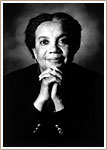
Marian Wright Edelman is President of the Children's Defense Fund whose Leave No Child Behind® mission is to ensure every child a Healthy Start, a Head Start, a Fair Start, a Safe Start and a Moral Start in life and successful passage to adulthood with the help of caring families and communities. For more information go to www.childrensdefense.org. Mrs. Edelman's Child Watch Column also appears each week on The Huffington Post.
|